
LG Electronics India made a dazzling market debut on Tuesday, ending 48 per cent higher than its issue price and surpassing its South Korean parent in market value.
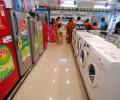
The industry is expecting double-digit growth on a year-on-year basis, helped by a possible price correction after softening of raw material inputs and factors such as positive sentiments, pent up demand and improving economic conditions. Besides, a shift in consumer behaviour from price consciousness towards technologically advanced premium products with quality, value proposition and safety aspects leading to a rise in demand for home automation products is making the industry upbeat. With the government's production linked incentive (PLI) scheme for white goods, which has witnessed a committed investment of Rs 4,614 crore, in place, many manufacturers are gearing up to make the most out of the opportunity as well as take steps towards reducing their dependency on imports and make products more affordable.

Urban markets account for the major share of total revenues.
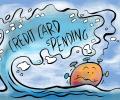
Credit card adoption is rapidly expanding beyond India's major metropolitan areas into Tier-II and Tier-III cities, driven by increasing incomes, digital awareness, and the integration of RuPay credit cards with UPI, according to a new report by SBI Card.

The JV, Voltbek Home Appliances, aims to take on LG, Samsung as well as home-grown players such as Godrej among others head on with a slew of products that hopes to combine the best of both worlds -- European technology and design, with Indian pricing and delivery.

'As re-industrialisation gathers pace across regions like Asia, Europe and the US, a wide range of products and inputs will see demand.'

Sri City in Andhra Pradesh is dubbed the "Cooling City" of India, accounting for nearly 40 per cent of the air conditioners (ACs) manufactured in the country. On Tuesday, this industrial hub added one more feather to its cooling credentials. Carrier Air Conditioning and Refrigeration Ltd, the Indian arm of the oldest AC company in the world, Carrier Global, signed a deal to invest around ~1,000 crore for a new manufacturing unit at Sri City.

The fiscal tilt towards capex benefits companies in investment-related sectors like capital goods, defence equipment, engineering & construction and metal & mining. The planned cut in revenue expenditure will weigh on companies in consumption sectors like FMCG, consumer durables and retail.

'Instant home services act as an on-demand household support system, bridging the gap between informal domestic help and structured service platforms,'
Some of the key names include: Maruti, M&M, Ashok Leyland, Britannia, Ultratech, JK Cement, Havells, Voltas, Amber, Metro, Trent, LemonTree, Indian Hotels, Niva Bupa, HDFC Life, IGL, Acme Solar, Suzlon, Swiggy, Delhivery, ICICI Bank, HDFC Bank, Bajaj Finance, Shriram Finance," according to a report by Motilal Oswal Financial Services.

The surge has come alongside a decline in average issue sizes and more muted listing-day returns compared with last year.

'From tariff tensions and border skirmishes to unrest in West Asia.' 'The worst may be behind us. But any further upmove will now have to come from earnings.'
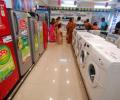
The festival season has already begun in the west and south of India with Ganesh Chaturthi and Onam, respectively, and consumer companies are witnessing a pick-up in sales compared to pre-Covid levels. Retailers, fast-moving consumer goods (FMCG) and consumer durables companies expect their sales to grow in double digits this festival season compared to pre-pandemic times, as there are no curbs on movement now. Adani Wilmar expects sales volume to be higher by 15-20 per cent as rural India has largely witnessed good monsoon rains, and employment has picked up in urban areas.

The Rs 1.5-trillion-a-year industry has ended the year with a 30 per cent fall in sales because after a steady recovery in the festive season, multiple factors dashed its hopes of revival at the end of the year.

Shekhar Bajaj, chairman and managing director of the firm, explains to Viveat Susan Pinto on what led to this sales jump, besides throwing light on the benefits accruing to the sector on account of the GST rate cuts in appliances.

A Rs 23,000-crore production-linked incentive (PLI) scheme for electronic components may boost margins and enable a broader product mix.

Clearly, some of the bullishness of the early days has gone missing. Ola's market share is slipping amid rising competition from incumbents like Bajaj Auto and TVS.

As freebies/gift vouchers attract GST, retailers are opting for straight discounts this festive season.

The July-September quarter (Q2) results for 2024-25 (FY25) from the largest listed consumer electrical solutions companies, Havells India and Polycab India, followed similar trends, demonstrating robust revenue growth while falling short of profitability expectations. Both companies witnessed overall growth in the 16-30 per cent range, but margins declined by 130-290 basis points (bps) year-on-year (Y-o-Y). Although brokerages are bullish on long-term prospects and have raised revenue projections, earnings forecasts have been revised downward due to margin pressures.

The consumer durables player has modified its decades-old logo as it hopes to hold fresh appeal beyond 'mums' to include millennials, says Ritwik Sharma.

Havells will acquire the entire consumer business infrastructure, people and distribution network. Plus all intellectual property of the Lloyd brand, logo, trademark and attendant rights.

As much as 20 per cent of the gross merchandise value (GMV) of sales made on e-commerce platforms is being financed through the no-cost EMI route, up from 4-5 pc two years ago.

The settlement offer has been made for 13 out of the 15 Videocon group companies that are currently under Corporate Insolvency Resolution Process.

The anticipated adverse impact on the economy and consequent uncertainty around employment prospects is likely to result in lower purchasing power.

Despite the failure of most e-commerce players to meet orders through the first week of the lockdown, there has been no serious crisis, thanks to supplies from 11 million small kirana and mom-and-pop stores across the country with the support of over 300,000 distributors and wholesalers.

India's Rs 4.5-trillion fast-moving consumer goods (FMCG) sector was one of the first to bounce back from the lockdown induced blues, reporting a year-on-year (YoY) growth in the October-December quarter last year. That said, the overall consumption figures continue to remain depressed. The FMCG market, which includes daily consumables like branded atta, hand sanitizers, edible oils, shampoos, razors, and so on, recorded 7.3 per cent value growth during the period, while the smartphone market grew by 21 per cent.
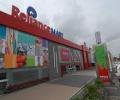
Reliance has around 100 Delight stores in the country.

Festive season is the mainstay of most brick and mortar retail chains.

Most analysts as well as company executives say the rally in commodity prices is ill-timed coming just when firms were recovering from disruptions such as demonetisation & introduction of GST
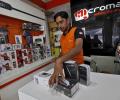
At least two of them - Lava and Micromax - are arming themselves against the Chinese rivals which made them insignificant in the local market over the past few years.

Normal monsoon makes FMCG, automobile and consumer durable companies optimistic about growth prospects

If you have an active trading account or have consumer loans or thinking of taking out a loan, consider investing in NBFCs, says Devangshu Datta

The rupee has depreciated by 0.95 per cent in two days.

These investors are not only betting on little-known stocks, but also sectors that the market participants are not paying much heed to. Some of these stocks can be potential multi-baggers, while others may not live up to the expectations of these stock-pickers, says Jash Kriplani.

Best performers get gifts such as foreign holidays, high-end cars and mobile devices

Despite the demonetisation of 2016 and the rise in digital transactions that followed, the economy's dependence on cash has remained as high as ever. So when the Reserve Bank of India (RBI) introduced a pilot project of its version of digital cash - called the central bank digital currency (CBDC) - on December 1, many questions were asked. Can the CBDC replace physical cash, even partially? Can it match cash in terms of convenience? Are CBDC transactions truly anonymous?

'The number of first-time investors into MFs can grow four times more than the current rate if we are able to accept the bank KYCs.'

The move to ban Rs 500 and 1000 notes may not curb the root cause of black money.

In the broader markets, the mid and smallcap indices were up 0.3% each, underperforming the BSE benchmark index which gained 0.5%.

From auto, refrigerator, and mobile handset makers to real estate firms, companies are tying up with banks to dole out attractive finance schemes and discounts to make buying more affordable.
 © 2026 Rediff.com - Advertise with us - Disclaimer - Privacy Policy - Sitemap - Feedback - About us - Terms of use - Grievances